The analogue vs. digital source argument for producing vinyl records just does not want to stop, and will probably continue for a long time. While it would be great to have all-analogue production steps for new vinyl, it is not feasible, given some of the constraints discussed below. First, let’s look at some arguments analogue die-hards bring to the table, with some comments.
1. It must be an all-analogue process otherwise it is going to sound bad.
 If you are in this camp, have a look at your record collection and then dispose of your expensive copies of Donald Fagen’s ‘The Nightfly’ and Dire Straits’ ‘Brothers in Arms’, as just two examples. These were digital recordings to begin with. There are no original analogue tapes for these releases, at best an analogue tape that is a copy of the digital source. The DSD copies of the original analogue master tapes used commonly today are so close to the original analogue master that very few, if any, will hear a difference, as we experienced with the MoFi debacle a few years ago.
2. If the original analogue tape is not used, it’s a useless venture to press vinyl records.
Really? When Mobile Fidelity Sound Lab decided to reissue Michael Jackson’s ‘Thriller’ as a One Step, they wanted to press 40 000 copies, meaning the original master tape had to be used 40 times or so to create enough lacquers to meet the demand. There is no way any record company would allow this as the chances of destroying the master tape increase with every subsequent running of the tape. They had to find another solution.
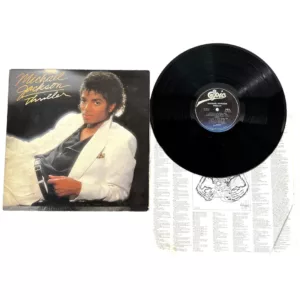 Keep in mind that the original master tape for ‘Thriller’ belongs to Sony Music Entertainment, a US company. Mobile Fidelity Sound Lab is also a US company. Sony was never going to allow the tape to be abused in this way, even inside the USA. What then are the chances of ever getting an analogue master tape from, let’s say, EMI in the UK? These master tapes are degrading every year. In the future your choice is either a reissue produced from a digital copy of the master tape, or nothing at all.
The problem with ‘Thriller’ was not whether its source and complete production path was analogue. Had Mobile Fidelity simply stated that a full analogue process was not used, there would not have been an issue. In fact, many “audiophiles” drooled over the sound of the album when it was released. It was only after the reality surfaced that the original master tape was not used, but either an analogue tape copy of the master tape or a DSD (digital) version, that it became a problem. It turned out that a DSD copy was used. Suddenly they felt that the “warm analogue sound” they “heard” just a week before was now suddenly a digital disaster. Did they hear “analogue” or “digital” while listening? Probably not. Audiofoolery.
Mobile Fidelity’s problem was that their marketing material was incorrect in the way they indicated the process used. While an analogue master tape was used, this was only done once to create a DSD copy. The subsequent lacquers were then cut from the DSD source to produce the stampers. The DSD source could be used infinitely without degrading in any way.
3. Digital can never sound as good as analogue.
This is subjective and not measurable. The two albums mentioned earlier were both recorded digitally and there has never been an analogue master tape. Yet these are two highly-regarded albums. There are many other examples, Mobile Fidelity Sound Lab’s titles being some that sound amazing, despite the presence of the DSD step. I own a number of titles that were produced digitally to start with and they sound fantastic.
In the end, most of those who buy vinyl records are not really concerned with the source from which the album was produced. For them it is about the tactile experience of actually handling a LP.  This is a topic that warrants its own space. I have had a few misses handling my LPs, resulting in nicks and pops and a less than perfect listening experience on some records. It’s not about being perfect. Nothing is perfect. Vinyl is an imperfect medium. It is also visual and draws attention. I have a Theuns Jordaan LP, ‘Roeper’. It sounds just great on vinyl and visitors are often amazed when I pull it out and play it. I also have it on CD but it has never attracted any attention. Do I care that I know this album was digitally recorded? Not in the least.
In the end, let’s enjoy the hobby. By all means hunt down that elusive all-analogue pressing you have been looking for. Understand though, that we have to move on with the times. Vinyl records will be around long after we have started feeding the daisies, because the sense of ownership and tactility are still what draws people to the medium.
Andries Oberholzer
Categories
Latest News
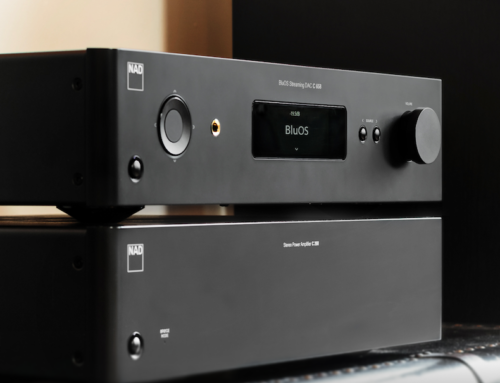
NAD C658 BluOS Streaming DAC
There is always more to hear in the music you love. The award-winning NAD C 658 BluOS Streaming DAC brings [...]