It was around 1983 in Johannesburg. As a university student, I had a standard Japanese rack system. It wasn’t perfect but it was the best I could afford at the time. Across the street from my home was a local CNA where I spent many hours reading the various UK hifi magazines. These introduced me to “proper” hifi but I knew I could not afford most of the nice things I drooled over. Many of the products were also not available locally. Vinyl was the only proper medium back then, and the Dais, Pink Triangle, Heybrook, Systemdek, Sota, and Ariston turntables were often pitched against Linn’s Sondek LP12 in shootouts. The latter usually turned out to be the winner. It was clever marketing; nothing else.
Back then if you lived in the Johannesburg area, there were three or four excellent hifi stores you could visit. I remember Hi Fi Installations in Fox Street, opposite the Carlton Centre. Looking through the windows at night, I was so close to the hifi components, just a window thickness away. There were no burglar bars. During the day I often went in there to spend some time listening to the products on display. Thank you to those guys for allowing me the opportunity.
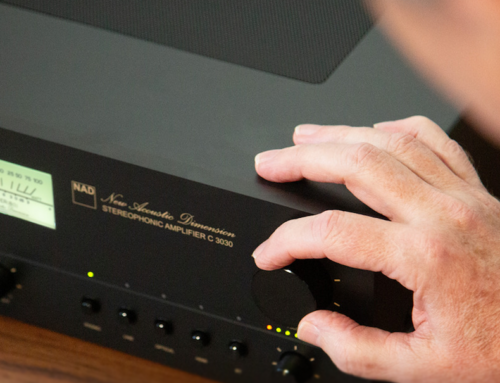
To the north was Soundlab in Milpark and it soon became my go-to shop. I must add that this meant I often skipped attending classes in the process. This was a genuine brick-and-mortar store. If I remember correctly, they stocked products that offered you a choice of two or three levels, depending on your budget. One offered Rega’s Planar 2 and 3 turntables, NAD 3020 and 3140 (later the 3150) amplifiers, and Boston loudspeakers. This was more or less in my price range. The higher tier was way more expensive – Linn’s Sondek LP12 with a variety of their tonearms, and Kan, SARA, and Isobarik speakers, with Naim amplification. The choice was fairly limited in a way, but it worked well for the shop and the customers they targeted.
What kept me coming back here was the amazing treatment I got as a 20 year old student. I could walk in at any time of the week and the owner would allow me to listen to whatever equipment I wanted to and play whatever album I desired. One moment in time that for me absolutely defined how music should sound, was listening to Rickie Lee Jones’ 1979 self-titled album on MFSL’s Original Master Recoding release. Side One ends with The Last Chance Texaco and it was just almost ethereal to listen to. I had access to equipment and albums many others could only dream of even though the owner knew I could not afford the expensive systems I listened to. To him what mattered was my enjoyment of the music, not the equipment. I eventually bought a Rega Planar 3, Grado MM (soon replaced by a Rega Elys when it was released later), a NAD 3020A amplifier, Boston A40 bookshelves, Linn Kan stands, and Monster loudspeaker cables, courtesy of my academic bursary’s handsome payout. I was in hifi heaven. After this, I still visited the shop quite often. After that the army got hold of me and life happened.
Back then, brick-and-mortar stores were the only way you could buy specialist hifi products. To this day I still remember the distinct new-hifi smell the shops had. Fast forward 40+ years and the entire landscape has changed. We just do not have the same experience today that we had in the past. Many stores have items in stock, but most refer you to their website to purchase online. Demonstrations for Average Joe are a luxury and often a hurried affair. In South Africa the traditional smaller shops have all but disappeared. Expenses are just too high to allow these businesses to survive, and the local market is simply too small to sustain these ventures. In addition, they cannot compete against online stores selling stock from warehouses.
However, I do not see the same trend in the UK. If often look at the websites of the smaller businesses, and the photos they show of their listening rooms are just so inviting. What draws me to  these shops is the intimate environment they seem to create. Rooms are furnished like you would find in a normal home, rather than systems-only rooms that are sterile and stripped bare, with a single chair. I have always maintained that your system should fit in with your existing living space, not the other way. Most family living rooms do not allow for a “sweet spot”, and creating one at the expense of comfort and shared space is just not on. Designing a room to have a single seating position built around your personal requirements is a selfish endeavour, essentially preventing anyone else from enjoying it. No wonder it is often perceived as a snobbish and lonely hobby. Then again, there are some who are fortunate enough to have dedicated rooms that allow them to do what they want and live happy lives. Kudos to them. Apparently they also have happy wives.
Just imagine if we could go back to the earlier days where you could spend time in a shop, have the opportunity to sit down, and enjoy what you are listening to in an environment that creates a sense of relaxation. This is what I would love to have. I’d like to have a “hifi shop” with a website but no online store. A physical address, contact number, and an email address will suffice. I will focus just on a few products – turntables, CD players, amplifiers, and loudspeakers, along with only the most important accessories that will make the system work. Oh, and there must be a few demo vinyl records and a coffee machine. I would be more than happy to source stock from other suppliers. Items that do not require a demonstration and are not listened to, such as cleaning brushes and anti-static sleeves, you can purchase online. It is just easier than doing it all on your own.
I can dream, can’t I? Maybe there is someone out there who has the funding for something like this to work and needs a shop manager who is suitably experienced to run the shop and has, most importantly, enthusiasm and a passion for music. The latter two are what we sorely miss right now.
Andries Oberholzer
Categories
Latest News
Apple Music Now Available on Bluesound!
Apple Music subscribers can now listen to over 100 million songs, ad-free, on Bluesound wireless speakers, stereo components, and soundbars [...]