KA11
| DAC Chip | Cirrus Logic CS43131 |
| Decoding formats | Supports up to PCM384 kHz/32-bit, DSD 256 |
| Input | Type-C or Lightning |
| Output | 3.5 mm single-ended |
| Output Power | L+R≥200 mW+200 mW (32 Ω, THD+N<1%, USB IN) / L+R≥245 mW+245 mW (16 Ω, THD+N<1%, USB IN) |
| Dimensions | 1 109x79x7 mm |
| Weight | 8.5 g |
JA11
| Decoding formats | PCM 32-bit/384 kHz/DSD 128 |
| Output | 3.5 mm unbalanced |
| Output Power | 30 mW |
| Dimensions | 2.5×0.5×3.5mm |
| Weight | <5 g |
PRICE KA11 R1 290.00/ JA11 R390.00
IMPORTED BY C-Plan Audio 083 212-4599
WEBSITE www.cplanaudio.co.za / www.fiio.com
The Short Of It…
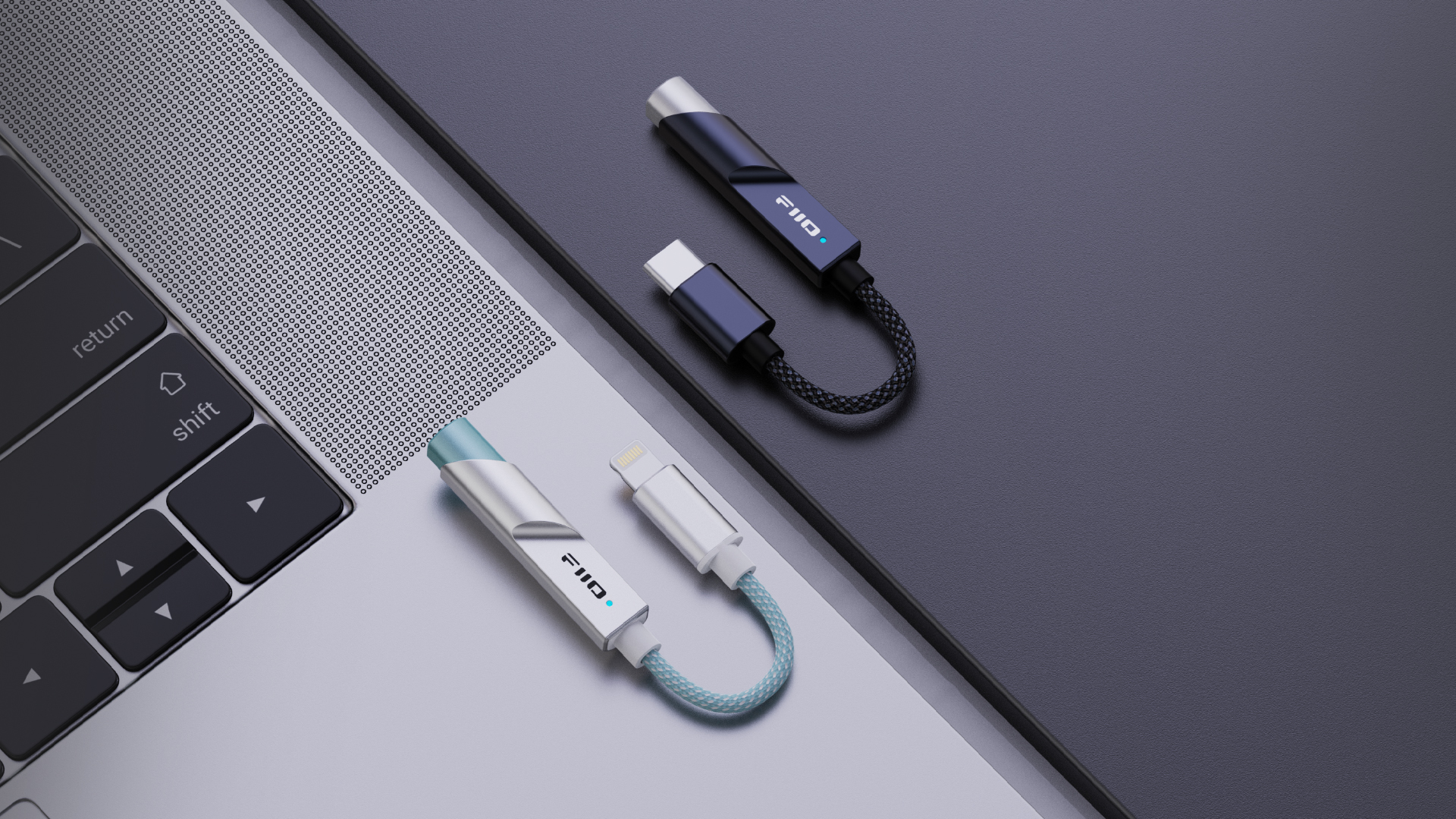
Improving the sound quality of your music away from your dedicated listening room at home is now easier than ever with these two dongles from FiiO/Jade Audio. Almost too small for belief, your on-the-go music library will be transformed for the better.
The Long Of It…
I must confess up front that I am a huge FiiO fan. It was, after all, the BTR1 that I bought years ago from local FiiO distributor C-Plan Audio, that first brought me back into the AV fold and allowed me to start enjoying my music once more (back then, for convenience’s sake, all my music was on my Smartphone).
From there (as all AV lovers know), it’s a one-way trip that involves spending increasingly more money as you go. On other fronts, too – subscriptions to Spotify first, and then to TIDAL as well, so I could experience the MQA decoding offered by the later FiiO products. And better-quality headphones, too…
Now before we get into this review, it’s important to note that I am looking at it from the point of view that it is a portable DAC, designed to enhance your listening pleasure via a Smartphone or desktop/laptop. Don’t expect the performance of a dedicated desktop DAC.
Since the BTR1, I’ve reviewed several of FiiO’s Bluetooth DAC/Amps, including the BTR5 2021 and the Q3 DAC/Amplifier, and I’ve never felt let down. Across the board, FiiO’s products impress from the moment you start the unboxing process.
Now, a frequent concern I used to mention with their early devices, was that they were so small, I was worried that I might lose them in the chaotic clutter of my desk. I never did, of course, until the KA11. But with measurements of 1 109x79x7 mm, I think I can be forgiven. Fortunately enough, it was a temporary thing.
In any case, to preserve my nerves, its review partner, the JA11, remained in its actual packing until it became time to review it…
These DAC dongles pack an impressive amount of technology into such small bodies, and it’s a reminder of just how quickly technology has developed over the past decade in particular.
The KA11 is the premium model of the two reviewed here, with its Cirrus Logic CS43131 DAC and support for PCM384 kHz/32-bit, DSD 256 (the dongle is Hi-Res Audio certified!). An independent power supply also helps keep away any hint of noise from the signal, and no doubt adds to the ability of the KA11 to have an impressive output of 245 mW @16 ohm, and 200 mW @32 ohm.

The dongle’s cable is made from oxygen-free palladium-plated copper wires, allowing for low impedance and quick transmission of signals. Covering the wires is a layer of flexible silicone and braided cloth.
Both USB Type-C and Apple Lightning connections are available, meaning that you have a veritable plethora of connection options available to you – including even an option to choose UAC1.0 support for Gamers.
As with all the portable FiiO DACs I’ve reviewed, the KA11 uses a single LED light to show you what sort of files are being played: If it shows light blue, then it’s less than 48 kHz, while yellow is above 48 kHz, and green is DSD. In truth, I no longer pay attention to the colours – I’m more focussed on enjoying the music. But in the absence of a display, obviously some sort of indicator is needed.
For my reviews, I used the following headphones: Sennheiser’s HD200 Pro, AKG’s K240 MK II, and the SONOS Ace, SONOS’ first ever headphone offering.
The point I want to make above, is that while FiiO has traditionally shown in-ears in its advertising shots (obviously easier to drive), I have always used over-ears when using their portables. And although it meant lower volume levels at times, the quality was always astounding with never a hint of strain.
Not so with the KA11! In fact, I actually found myself turning the volume down at times. It’s truly astounding how much power is contained in such a small device.
For the listening sessions on both dongles, I used a selection of tracks from both my Spotify as well as TIDAL collections, each one chosen to test a specific facet of the musical abilities of the two DACs.
As far as extra tweaking is concerned, FiiO’s brilliant and intuitive Control App allows you to adjust volume and bitrate, as well as offering an equaliser, the latter of which I’ve honestly never had to use. Temped sometimes, but never used.
For vocals, my go-to is always Sarah McLachlan, Missy Higgins, KT Tunstall, Never Enough and Tightrope from ‘The Greatest Showman’, and most recently Agnes Obel’s The Curse. Acoustic and electric guitar is Mike Oldfield, Gary Moore and some Pink Floyd, while to really test the DAC’s abilities to cope with a multitude of instruments, sound effects, spoken vocals and much more, I use Ghost Rider’s Make Us Stronger. Influenced by my wife, Rain by Tony Ann is an awesome test for piano reproduction.
Make Us Stronger is a track that really tests the abilities of any product connected to the source, with its extreme swings in volume and frequency range sweeps. Parts of the track are in fact so bizarre that the first time I heard it at a showroom, I thought the speakers had blown…
As mentioned before, volume is certainly not lacking, and while I felt that the dongle struggled a bit with the extreme swings in volume and frequencies that Make Us Stronger delivers, its performance on all of the other genres was nothing short of stellar.
My only slight gripe is that I felt that it lacked just a smidgeon of impact in the lower frequencies, but to be honest I prefer this to a device that delivers so much bass that it smothers the midrange frequencies in particular. Midbass is exactly how you like it to be. Punchy. Tight and controlled. Vocals were delivered beautifully, and acoustic guitars in particular were rendered with crystal clear clarity.
That said, for obvious reasons your choice of headphones will play a role – the Sennheisers are for me a little too clinical at times, while switching them out with the AKG 240s added more overall bass to the listening experience. The SONOS Ace headphones most likely provided the best middle ground.
The dongle does get a little warm to the touch with extended playing, but nothing to make it uncomfortable to carry.
Now to the FiiO/Jade Audio JA11.
This dongle/DAC is framed as being the current entry-level product from FiiO in this particular genre. Unlike all the other FiiO products I have reviewed, this one arrived in a small plastic resealable packet. Not what I am used to!
And yet, who cares about packaging when the contents are capable of such sonic magic?
So, it may be referred to as being entry-level, but what it offers is anything but.
Let’s start with the specs, though. The chipset isn’t listed, but nonetheless the dongle supports decoding of PCM384 kHz/32-bit and DSD 128. As with the KA11, it is High Res Audio-capable.
With support for microphone input, as well as CTIA/OMTP inline controls, this device is capable of making calls, recording audio, and even (God forbid) singing karaoke.
A built in DSP allows you to either choose the preset tuning style or self-define your music through PEQ. The FiiO App also allows you to use the officially recommended EQ curves, allowing you to enjoy the fun of professional tuning to personalise your audio experience effortlessly.
As with the KA11, build quality is beyond reproach. The JA11 is made of aluminium-magnesium alloy with a secondary anodizing process to better showcase the texture and aesthetics of the body. Inside the cable are high-purity oxygen-free palladium-plated copper wires, which are low impedance and anti-interference making them capable of stably transmitting audio signals.
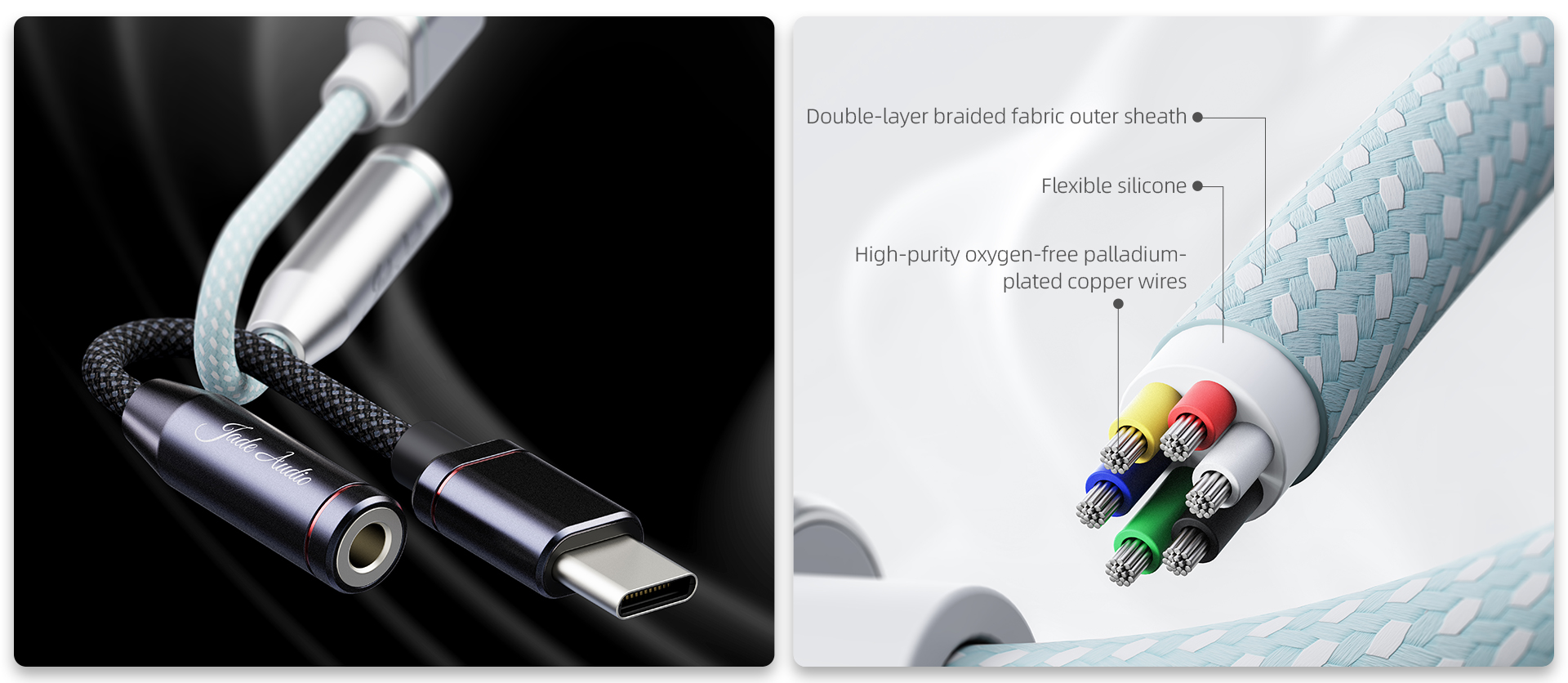
The cable itself features a dual-layer sheath made of flexible silicone and braided yarn, making it soft yet durable.
Performance-wise I had no complaints. The dongle stays cool, unlike the KA11, but with lower output capabilities, this is obviously to be expected. As with the KA11, I threw all my usual reference tracks at it, and while Ghost Rider’s track proved a little more difficult for it, in all honesty the only difference I could detect was that it struggled a little bit more when it came to volume.
But if we compare the KA11’s output of 200 mW to the JA11’s 30 mW, this is an obvious reason why. A big HOWEVER, though, is that you need to remember that I only use headphones for listening, not the easier-to-drive in-ears. The fact that the listening experience was still great, speaks huge volumes about the JA11’s abilities.
So, in summation, FiiO/Jade Audio has two great DAC/Dongles that offer people on the move an extremely viable, tweakable option to give their portable music a new and fresh experience for quality listening. Ignore these at your own loss.
Andrew Rowland
Categories
Latest News

T 778 AV SURROUND SOUND RECEIVER
The NAD T 778 AV Surround Sound Receiver is designed to deliver an immersive home theatre experience with the musicality [...]